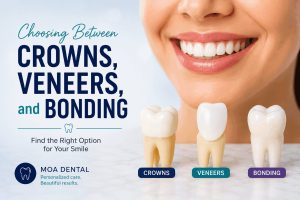
Crowns, veneers, and bonding are three of the premier options in cosmetic dentistry for achieving a smile makeover. Each option can enhance the aesthetics and function of your teeth, but each option serves a unique purpose. Choosing the right one for your smile makeover can be based on your goals, your budget, and your oral health. But how do you choose? Here at Moa Dental, we assist patients in making these types of cosmetic dental decisions routinely, and each option is outlined clearly, one against the other, in this guide.
Why the Right Choice Matters
The consequences of opting for inadequate treatment include increased costs later on and/or unsatisfactory results. The costs, benefits, and trade-offs of the aesthetic appearance and functionality of the three treatment options differ. A dental crown repairs and restores the functionality of the damaged tooth, a dental veneer enhances the appearance of the front of your smile, and dental bonding is the quickest and least expensive option. These options differ, and with the help of your dentist, you should be best informed to make the right financial investment.
What Are Dental Crowns?
A dental crown is a restoration that fits over an entire tooth as a cap. This restoration is used to strengthen and protect a tooth and improve the appearance of a tooth. Dental crowns are used for broken, decayed, or root canal-treated teeth. A durable and natural crown can be made of porcelain or ceramic.
There are many pros to a dental crown, including durability and appearance. Dental crowns restore the function of the tooth and also protect the tooth underneath. There are some disadvantages as well to getting a ceramic crown. More of the natural tooth needs to be reshaped compared to other dental restoration options, and the price is greater than that of other options.
What Are Dental Veneers?
Dental veneers are thin, custom-made shells bonded to the front surfaces of your teeth. It’s a cosmetic-focused solution designed to correct stains, chips, gaps, and minor misalignment. Available as porcelain veneers or composite veneers, they create a natural, lifelike finish — and they’re the secret behind many stunning smile transformations.
Pros: Beautiful, natural appearance, stain-resistant (porcelain), long-lasting.
Cons: Requires some enamel removal, higher cost than bonding, best for cosmetic (not structural) issues.
What Is Dental Bonding?
Tooth bonding involves a composite resin that is customized to match each individual’s teeth. The resin is applied to the teeth in damaged or problematic spots. It is cured in shape with the use of a bonding light. Composite resin can cover small cracks, gaps, discoloration, and chips. Front tooth bonding is finished quickly, in one visit, and does not require patients to have their enamel removed. For these reasons, bonding is the least expensive option when compared to the other two methods.
Pros: bonding can be implemented quickly, is a less expensive method, is less invasive of the tooth, and usually requires only one visit. Cons: bonding is less durable, more easily stained, chips more easily, and has a shorter lifespan when compared to the other two options.
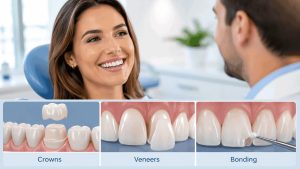
Crowns vs Veneers vs Bonding: Side-by-Side Comparison
Coverage & Purpose
Crowns cover the entire tooth for restoration; veneers cover the front surface for cosmetic enhancement, and bonding repairs specific spots.
Durability & Lifespan
Crowns last 10–15 years or more, porcelain veneers 10–15 years, and bonding typically 3–10 years.
Cost
Bonding is the most affordable, veneers fall in the middle, and crowns tend to cost the most.
Procedure & Time
Bonding is often same-day with minimal prep; veneers and crowns usually require two visits and some enamel reshaping.
Best For
Crowns for damaged teeth, veneers for full cosmetic makeovers, and bonding for quick, minor fixes.
When patients compare crowns vs veneers, the key difference is purpose: crowns restore and protect, while veneers enhance appearance. And in the veneers vs bonding debate, veneers last longer and resist stains, while bonding is faster and more affordable.
Cost Comparison: Crowns vs Veneers vs Bonding
Budget is often a deciding factor. The dental bonding cost is the most economical, making it a great option for minor cosmetic touch-ups. The veneers’ cost is a bigger investment but offers a dramatic, long-lasting transformation. Crowns tend to be the most expensive because they restore both structure and appearance — though when comparing crowns vs veneers cost, the two can be closer than you’d expect for premium materials.
While the upfront cost varies, it’s worth thinking long-term — a more durable option may prove more cost-effective over time. Many dental insurance plans contribute toward crowns (since they’re often medically necessary), while veneers and bonding are usually considered cosmetic. At Moa Dental, we offer transparent pricing and flexible financing to keep your dream smile within reach.
Which Option Is Right for You?
Here’s a quick way to think about it:
- Choose a crown if your tooth is damaged, decayed, or weakened — including cases needing cracked tooth treatment.
- Choose veneers if you want a complete cosmetic transformation of your smile.
- Choose bonding if you’re looking for a quick, affordable fix for minor imperfections.
You might also wonder about a crown vs. a filling — a filling repairs a small cavity, while a crown is needed when too much tooth structure is lost. Your ideal choice depends on your tooth’s health, budget, and goals, all of which we’ll assess during your consultation.
Can You Combine Treatments?
Absolutely. Many smile makeover plans use a combination of treatments for the best results. For example, you might get a crown on a damaged back tooth, veneers on your most visible front teeth, and bonding to fix a small chip elsewhere. A personalized plan lets us address each tooth with the most appropriate solution.
Exploring Veneer Alternatives
If veneers aren’t the right fit, there are excellent veneer alternatives. Bonding offers a more affordable cosmetic option, while crowns provide full tooth restoration for teeth that need extra strength. During your visit, we’ll help you weigh all the cosmetic dental treatments available.
How to Care for Your New Smile
No matter which option you choose, good care keeps your smile looking its best:
- Brush twice a day and floss daily
- Avoid biting hard objects like ice or pens
- Limit stain-causing foods and drinks (especially with bonding)
- Wear a night guard if you grind your teeth
- Visit Moa Dental for regular checkups and cleanings

Find the Right Fit for Your Smile at Moa Dental
Crowns, veneers, and bonding each offer a unique path to a better smile — crowns for restoration, veneers for transformation, and bonding for quick, affordable fixes. The best choice comes down to your teeth, your goals, and expert guidance.
Ready to discover which option is right for you? Book your smile consultation with Moa Dental today, and let’s create a personalized plan for a smile you’ll love.
Frequently Asked Questions
1. Which lasts longer: crowns, veneers, or bonding?
Crowns and porcelain veneers last the longest (10–15+ years), while bonding typically lasts 3–10 years.
2. Is bonding cheaper than veneers?
Yes. Bonding is the most affordable of the three, making it ideal for minor cosmetic fixes.
3. Do crowns or veneers look more natural?
Both look very natural when done well. Veneers are designed purely for aesthetics, while crowns balance strength and appearance.
4. Which option removes the least enamel?
Bonding removes the least, veneers require a thin layer, and crowns require the most reshaping.
5. Does insurance cover crowns, veneers, or bonding?
Crowns are often partially covered when medically necessary, while veneers and bonding are usually considered cosmetic. We’ll help you check your coverage.