If you are missing one or more teeth, the two most common ways to fill the gap are a dental bridge and a partial denture. Here is the short answer to the partial denture vs bridge question: a bridge is fixed in place and feels closest to your natural teeth, while a partial denture is removable, usually costs less, and can replace several teeth in different spots. Which one suits you depends on how many teeth are missing, where the gaps are, and how healthy the neighboring teeth are.
At Moa Dental in Torrance, patients ask us to compare a dental bridge vs partial denture all the time. This guide walks through how each one works, the honest pros and cons, what they typically cost in 2026, how long they last, and the questions that usually settle the decision.
Partial Denture vs Bridge: The Quick Comparison
If you only read one section, make it this one. Here is the partial denture vs bridge comparison on the points patients care about most.
| Dental bridge | Partial denture | |
|---|---|---|
| How it stays in | Cemented to crowns on the teeth beside the gap, or to dental implants | Clips onto your natural teeth with metal or tooth-colored clasps |
| Removable? | No, it stays in all the time | Yes, you take it out to clean it and usually at night |
| Teeth it replaces | Usually one to three teeth in a row | Several teeth, even in different spots on the same arch |
| Neighboring teeth | A traditional bridge needs the teeth beside the gap reshaped for crowns | Little or no reshaping in most cases |
| How it feels | Closest to natural teeth | Comfortable once you adjust, but it can move slightly when you chew |
| Typical lifespan | 5 to 15 years, and often longer | About 7 to 10 years for dentures, with relines along the way |
| Typical U.S. cost | About $3,600 to $5,200 on average for a three-unit bridge | About $1,800 to $2,300 on average, depending on material |
What Is a Dental Bridge?
A dental bridge is a fixed restoration that literally bridges the space left by a missing tooth. The replacement tooth, called a pontic, is joined to crowns that fit over the healthy teeth on either side of the gap, or it is attached to dental implants. Because it is cemented in place, you cannot take it out at home, and it looks and functions much like your own teeth.
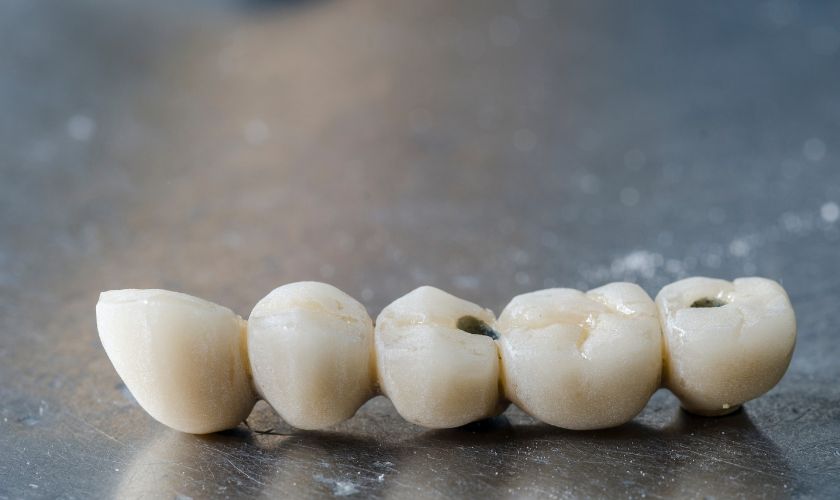
Bridges can be made from porcelain, zirconia, metal alloys, or a combination. A bridge is only as strong as the teeth that hold it up, which is why your dentist will look closely at the health of those neighboring teeth before recommending one.
Types of dental bridges
- Traditional bridge: crowns on the teeth on both sides of the gap hold the replacement tooth. This is the most common type.
- Cantilever bridge: the replacement tooth is supported on one side only, which can work when there is a healthy tooth on just one side of the gap.
- Maryland bridge (resin-bonded): thin wings bond to the backs of the neighboring teeth, so little or no reshaping is needed. It is most often used for a front tooth.
- Implant-supported bridge: the bridge rests on dental implants instead of natural teeth, which is useful when several teeth in a row are missing.
Our team places all four types. You can see how the process works on our dental bridges in Torrance page, and our dental crowns page explains the crowns that anchor a traditional bridge.
What Is a Removable Partial Denture?
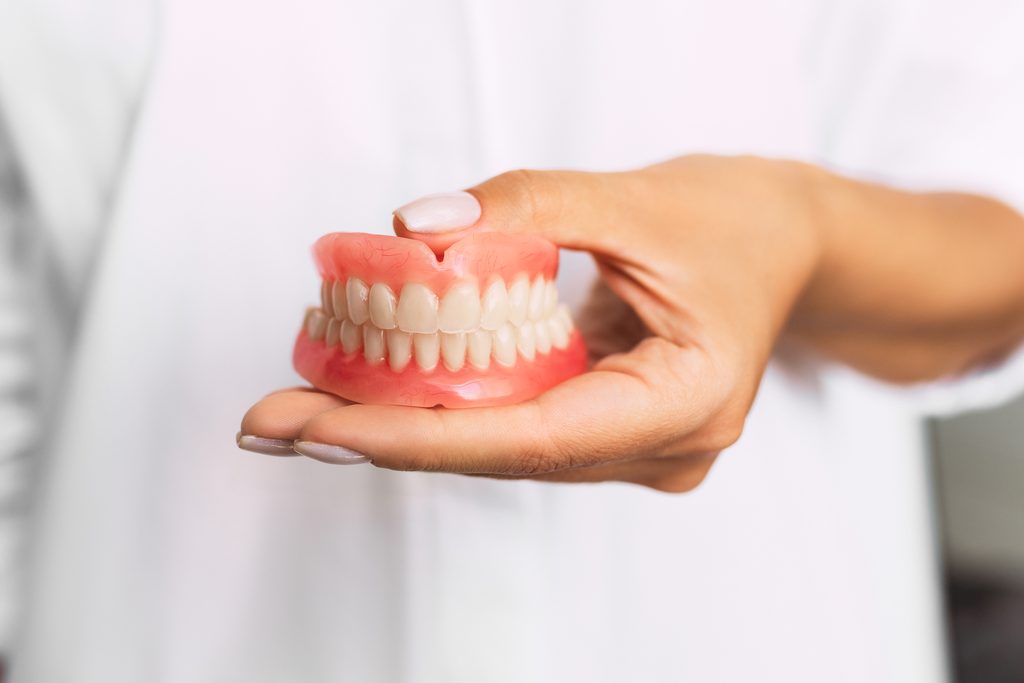
A partial denture is a removable appliance that replaces missing teeth when some of your natural teeth remain. The replacement teeth sit on a gum-colored base, and the partial is held in place by small clasps or precision attachments that grip your remaining teeth. You take it out to clean it, and most people remove it at night.
According to the American Dental Association’s guide to partial dentures, a new partial can feel a little awkward or bulky at first. That is normal, and it fades as your mouth gets used to it.
Types of partial dentures
- Cast metal partial denture: a thin, strong metal framework with natural-looking teeth. It is a common long-term choice because it is durable and stable.
- Acrylic partial denture: an all-acrylic base that costs less and is quick to make. It is a little bulkier, so it is often used as an interim or temporary option.
- Flexible partial dentures: made from a bendable, nylon-like material with tooth-colored clasps, so there is no metal on show.
- Dental flipper: a lightweight temporary partial, usually for one or two front teeth, worn while you heal or wait for a bridge or implant.
We offer acrylic, cast metal, and flexible partials. Our partial dentures page covers the fitting process, and if you are weighing a dental bridge vs dentures for more extensive tooth loss, our dentures page explains the full range of removable options.
Pros and Cons of a Dental Bridge
A bridge is popular because it feels like part of you. The trade-offs are cost and the work done on the teeth that hold it.
Pros
- Fixed in place, so there is nothing to take out or keep track of
- Looks and feels the most like natural teeth
- Restores normal chewing and speech
- Keeps the neighboring teeth from drifting into the gap
Cons
- A traditional bridge means reshaping two healthy teeth so they can hold crowns
- It costs more up front than a partial denture
- You need a floss threader or water flosser to clean under the replacement tooth
- If a supporting tooth develops decay or gum disease, the whole bridge may need to be replaced
- The jawbone under the missing tooth is not stimulated, so it can slowly shrink over time
Pros and Cons of a Partial Denture
A partial denture is the more flexible and budget-friendly choice. The trade-offs are stability and the daily routine of taking it out.
Pros
- Usually costs less up front than a bridge
- Replaces several teeth at once, even gaps on both sides of your mouth
- Little or no reshaping of your natural teeth
- Easy to take out and clean
- Partial dentures for back teeth work well when there is no tooth behind the gap to anchor a bridge
Cons
- Less stable than a bridge, so it can shift slightly when you chew
- Metal clasps may show when you smile, depending on where they sit
- It takes a few weeks to get used to speaking and eating with it
- It needs relining or adjusting as your gums and bone change over time
- You remove it at night, which some people never quite like
Partial Denture vs Bridge Cost in 2026
In the U.S., partial dentures cost less up front than a bridge in most cases, while dental bridge cost rises with the number of teeth and the materials used. The table below shows national averages from recent cost studies. They are a useful starting point, but your own price depends on how many teeth you are replacing, the materials, and your insurance.
| Treatment | National average | Typical range |
|---|---|---|
| Traditional bridge (one replacement tooth and two crowns) | $5,197 | $4,100 to $9,650 |
| Maryland (resin-bonded) bridge | $1,569 | Varies by case |
| Implant-supported bridge | $5,195 | Varies with the number of implants |
| Partial denture, resin (acrylic) | $1,784 | $1,335 to $2,873 |
| Partial denture, flexible nylon | $1,780 | $1,296 to $2,916 |
| Partial denture, cast metal | $2,293 | $1,700 to $3,717 |
Another benchmark: Delta Dental puts the average out-of-network cost of a three-unit bridge to replace one missing tooth at about $3,600. The spread between sources is a good reminder that the only number that matters is the one in your own treatment plan.
What changes the price
- How many teeth you are replacing, and whether the gaps are side by side or spread out
- Materials, such as zirconia or porcelain for a bridge, or cast metal, acrylic, or flexible nylon for a partial
- Implants, which add surgery and parts but can support a bridge or denture for the long term
- Preparation work, such as a tooth extraction or gum treatment before the new teeth are made
Does insurance cover a bridge or partial denture?
Your dental bridge cost with insurance is often well below the national averages above, because many dental plans treat both bridges and partials as major restorative care and pay part of the cost. Delta Dental, for example, says its plans cover 50% to 80% of the cost of a bridge after the deductible when you see an in-network dentist. Annual maximums still apply, so a large case can use most of a year’s benefit. If you are on Medicare, note that Original Medicare generally does not cover dentures or most dental care, so check whether your plan includes separate dental benefits.
At Moa Dental, we bill your insurance for you as a courtesy, and we accept CareCredit financing. Our insurance and payment options page lists the ways you can pay.
How Long Does a Dental Bridge Last?
On average, a dental bridge lasts five to 15 years, according to Cleveland Clinic, and many last longer with good home care and regular checkups.
How long do partial dentures last?
Cleveland Clinic puts the average lifespan of a denture at about seven to 10 years. A partial will also need relining or adjusting along the way, because your gums and jawbone slowly change shape once teeth are lost.
Caring for a bridge
Brush twice a day and clean under the replacement tooth every day with a floss threader, super floss, or a water flosser. Food and plaque collect in that space, and the supporting teeth are what keep a bridge in place, so protecting them from decay and gum disease is the whole game. Regular checkups let us catch small problems early.
Caring for a partial denture
- Take it out and brush it every day with a soft denture brush and a denture cleanser. Regular toothpaste is too abrasive and can scratch it.
- Keep it moist overnight in water or a soaking solution so it holds its shape.
- Rinse it after meals, and handle it over a folded towel or a sink of water in case you drop it.
- Brush your natural teeth carefully, especially the ones the clasps hold, because plaque tends to build up around them.
Are partial dentures comfortable to eat with?
Start with soft foods cut into small pieces, and chew on both sides of your mouth at the same time to keep the partial steady. Most patients adjust within a few weeks, and we can refine the fit if anything rubs or feels loose.
Dental Bridge vs Implant: Where Do Implants Fit In?
Bridges and partials are not the only choices. A dental implant replaces the root of a missing tooth, and it can support a single crown, a bridge, or a denture that snaps securely in place. Implants are the most stable option and help preserve the jawbone, but they cost more, involve minor surgery, and take several months to heal before the final teeth are placed.
If you are weighing partial dentures vs implants, or comparing an implant vs bridge vs partial denture, it helps to know these options can work together. Some patients start with a partial and move to implants later, while others choose an implant-supported bridge from the start. Learn more about dental implants in Torrance and implant-retained dentures, or read our guide to All-on-X dental implants if most of your teeth in an arch need replacing.
Bridge vs Partial: Which Is Right for You?
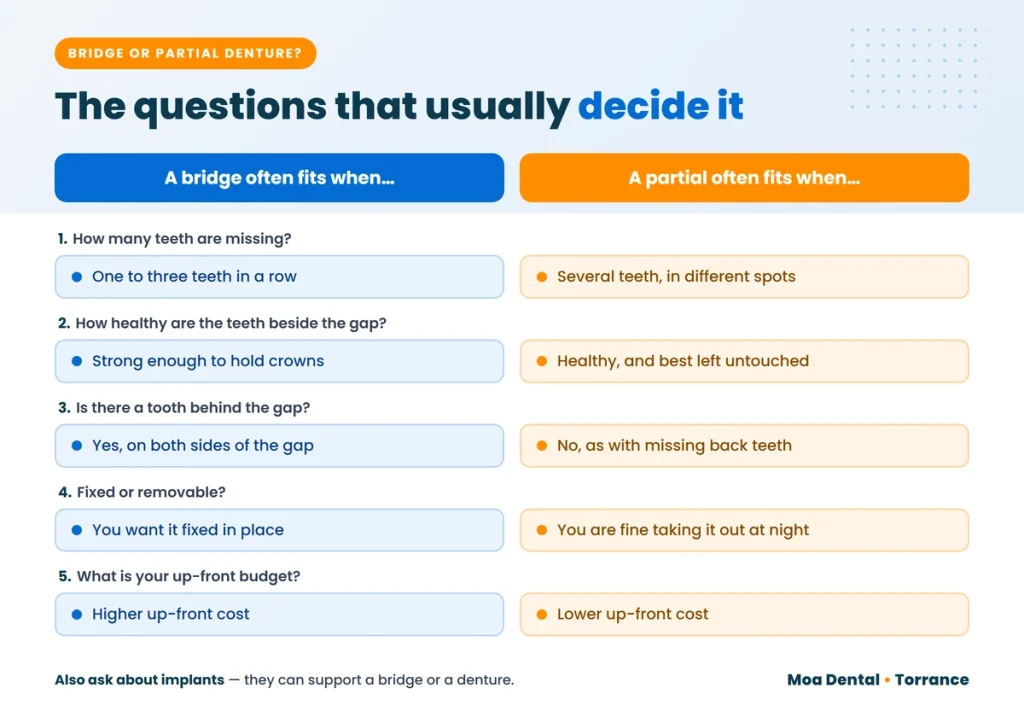
A few questions usually settle the partial vs. bridge decision:
A bridge is often the better fit when:
- You are missing one to three teeth in a row
- The teeth on both sides of the gap are strong, especially if they already need crowns
- You want something fixed that you never take out
A partial denture is often the better fit when:
- You are missing several teeth in different spots
- The neighboring teeth are healthy, and you would rather not reshape them
- You are missing back teeth with no tooth behind the gap to support a bridge
- You want a lower up-front cost, or a temporary option while you plan for implants
The partial denture vs bridge decision is best made after an exam, not from a chart. At Moa Dental in Torrance, we will examine the area, take digital X-rays, and talk through which option fits your goals and budget, including whether implants are worth considering. Call us at 310-530-2875 or request an appointment online, and we will help you choose with confidence.
Frequently Asked Questions
Is a bridge better than a partial denture?
In the partial denture vs bridge debate, neither option is better for everyone. A bridge is fixed and feels more natural, so it is often the better choice for one to three missing teeth in a row with strong teeth on each side. A partial denture costs less and can replace several teeth in different spots, so it often suits people missing more teeth or missing back teeth.
Partial denture vs bridge: which is cheaper?
A partial denture is usually cheaper up front. Recent national averages put partial dentures at about $1,780 to $2,293 depending on material, while a traditional three-unit bridge averages about $3,600 to $5,200. Your cost depends on the number of teeth, the materials, and your insurance.
How much are partial dentures?
Recent U.S. national averages are about $1,784 for a resin (acrylic) partial, $1,780 for a flexible nylon partial, and $2,293 for a cast metal partial, with most falling between about $1,300 and $3,700. Dental insurance can reduce your share.
How long does a dental bridge last compared with a partial denture?
A dental bridge lasts five to 15 years on average and often longer with good care. Dentures last about seven to 10 years on average, and a partial usually needs relining or adjusting along the way as your gums and jawbone change.
Can a partial denture replace back teeth?
Yes. A partial denture is often the go-to option for missing back teeth, especially when there is no tooth behind the gap to anchor a bridge. One partial can also replace gaps on both sides of the same arch.
What is the difference between a flipper and a bridge?
A flipper is a lightweight, removable temporary partial, usually for one or two front teeth, that you wear while you heal or wait for a permanent option. A bridge is a permanent, fixed restoration cemented to the neighboring teeth or to implants.
Does dental insurance cover bridges and partial dentures?
Many plans cover part of the cost of both as major restorative care. Delta Dental, for example, says its plans cover 50% to 80% of a bridge after the deductible when you see an in-network dentist. Annual maximums apply, and Original Medicare generally does not cover dentures or most dental care.
Can I switch from a partial denture to implants later?
Often, yes. Many people start with a partial denture and move to implants later, as long as the jawbone and gums are healthy enough. Your dentist can check whether you are a good candidate and plan the switch.
How long does it take to get used to a partial denture?
Most people adjust within a few weeks. It can feel bulky at first, and speaking and chewing take a little practice. Start with soft foods, chew on both sides, and let your dentist adjust the fit if anything rubs.
Cost figures are U.S. national averages from CareCredit’s 2024 and 2026 procedural cost studies (see the denture cost study) and from Delta Dental. They are general information, not a quote and not Moa Dental’s fee schedule.