Gum Recession Treatment in Torrance: Pinhole Technique vs Traditional Grafting

Short answer: Gum recession treatment starts with stopping the cause, such as gum disease, hard brushing, or grinding. Mild recession may only need gentler habits, desensitizing toothpaste, or bonding over an exposed root. To rebuild the gumline, traditional grafting adds tissue with incisions and stitches, while the Pinhole technique moves your own gum through a tiny opening.

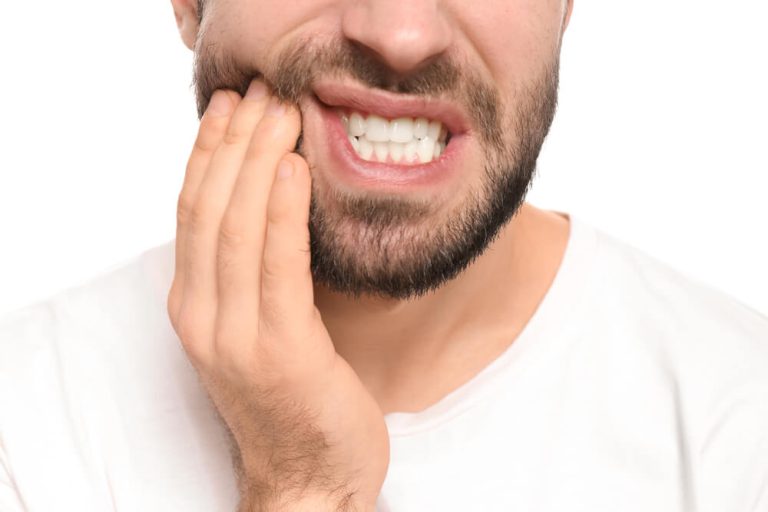
Have your teeth started to look a little longer? Do you feel a sharp twinge when you sip something cold? These can be signs of gum recession, and you are far from alone.

Cleveland Clinic reports that about 88% of people over 65 have recession on at least one tooth.

In this guide, we explain how to spot receding gums, what usually causes them, and how the minimally invasive Pinhole technique compares with traditional gum grafting for candidacy, recovery, cost, and results. If you already want to learn about the Pinhole option, see our page on Pinhole Gum Rejuvenation in Torrance.

What Is Gum Recession, and How Can You Tell You Have It?

Gum recession is the gradual loss of gum tissue at the gumline, which exposes more of the tooth and, eventually, its root. Unlike the crown of your tooth, the root is not covered by hard enamel. That is why exposed roots feel more sensitive and are more likely to wear or decay.
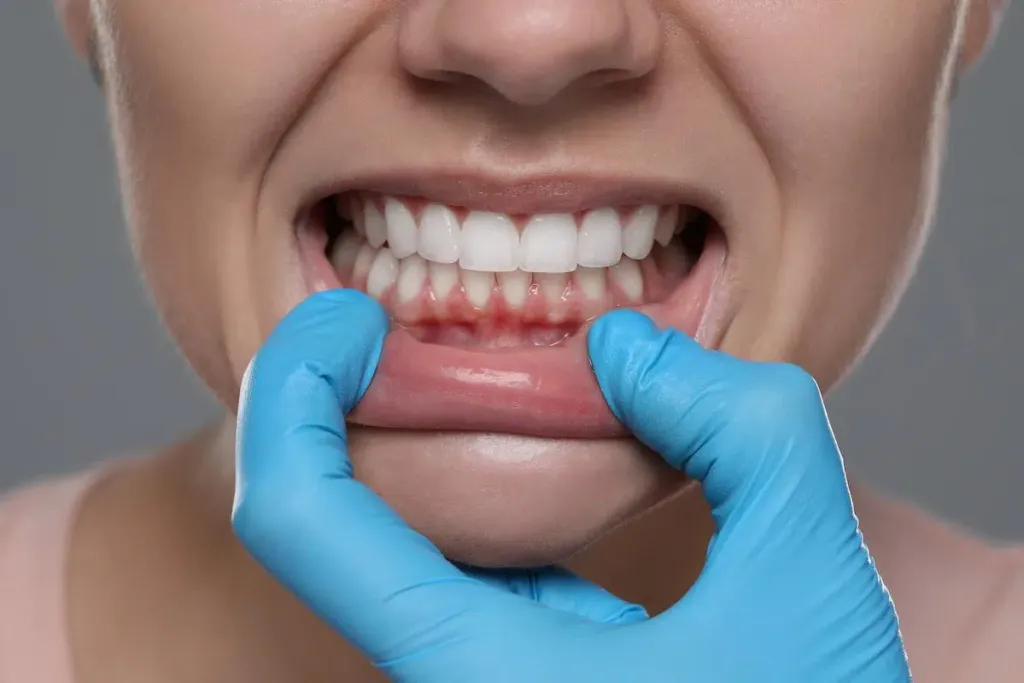
Dentist checking a patient's lower gumline before gum recession treatment

Recession usually happens slowly and without pain, so many people do not notice it until it is fairly advanced. According to Cleveland Clinic, receding gums cannot grow back, but treatment can stop recession from getting worse. That is why it is worth catching early.
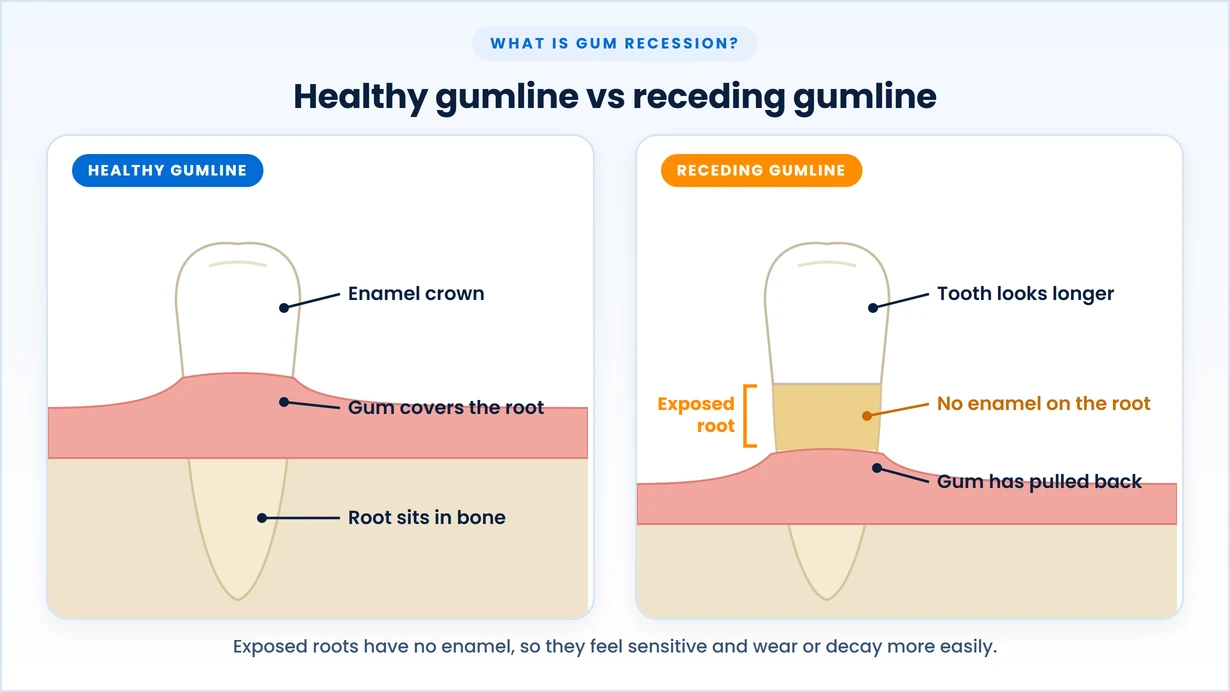
Diagram comparing a healthy gumline with a receding gumline that exposes the tooth root

Common Signs of Receding Gums

  • Teeth that look longer than they used to
  • Sensitivity to hot, cold, or sweet foods and drinks
  • A visible notch or ridge near the gumline
  • Darker or yellower root surfaces showing near the gums
  • Spaces between teeth that seem to be getting bigger
  • Gums that bleed, feel tender, or look red or swollen

What Causes Receding Gums?

Recession often has more than one cause, and finding the cause is just as important as treating the gums themselves. Common causes include:

  • Gum disease, which damages the gum tissue and the bone that supports your teeth
  • Brushing too hard or using a hard-bristled toothbrush
  • Grinding or clenching your teeth, especially at night
  • Genetics, since some people naturally have thinner gum tissue
  • Smoking or vaping, which harms gum health
  • Misaligned teeth or a bite that puts extra pressure on certain teeth
  • Lip or tongue piercings that rub against the gums

Which Gum Recession Treatment Do You Need?

The right treatment depends on how far your gums have pulled back, what caused it, and how healthy your gums and bone are. Most plans follow three steps: stop the cause, protect exposed roots, and rebuild the gumline if needed.

Step 1: Stop the Cause

Before rebuilding the gumline, the goal is to keep the problem from getting worse. That might mean switching to a soft toothbrush and a gentler technique, wearing a custom night guard if you grind your teeth, or treating gum disease first.

If you have gum infection or deep pockets, a deep teeth cleaning removes tartar from below the gumline so your gums can heal.

Step 2: Protect Exposed Roots

For mild recession, protecting the root may be all you need. Desensitizing toothpaste can calm sensitivity, although Cleveland Clinic notes it can take several weeks to start working. Tooth-colored dental bonding can also cover exposed tooth roots caused by gum recession.

Step 3: Rebuild the Gumline

When recession is more noticeable, or roots keep getting more exposed, the gumline can be restored with surgery. The two main approaches are traditional gum grafting and the Pinhole technique.

How Does Traditional Gum Grafting Work?

Gum grafting rebuilds the gumline by placing extra tissue over the exposed root and stitching it in place. It has been used for decades, and Cleveland Clinic calls gum graft surgery “the most predictable and long-lasting treatment option for gum recession.”

There are a few common types of gum graft:

  • Connective tissue graft: tissue is taken from under a small flap in the roof of the mouth (the palate) and stitched over the root.
  • Free gingival graft: a thin layer of tissue is taken directly from the palate, often to thicken thin gums.
  • Pedicle graft: gum from right next to the tooth is partly cut free and moved over the root.
  • Donor tissue graft: processed tissue from a tissue bank is used, so no tissue is taken from your palate.

Grafting works well, but it usually involves incisions and stitches, a second surgical site in the palate when your own tissue is used, and a recovery period that can feel tender. Cleveland Clinic says most people feel back to normal in about two weeks.

How Does the Pinhole Technique Work?

The Pinhole Surgical Technique (PST) treats recession by moving your existing gum tissue instead of adding a graft from your palate. Dr. John Chao described it in a 2012 study as a minimally invasive alternative to traditional grafting.

Here is what happens during the procedure:

  1. Evaluation and planning: your dentist examines your gums and identifies the areas of recession.
  2. A tiny entry point: a small pinhole is made in the gum tissue with specialized dental instruments.
  3. Repositioning: through that opening, the gum is gently loosened and moved over the exposed roots.
  4. Stabilizing: small collagen strips may be placed to help support the gums while they heal.
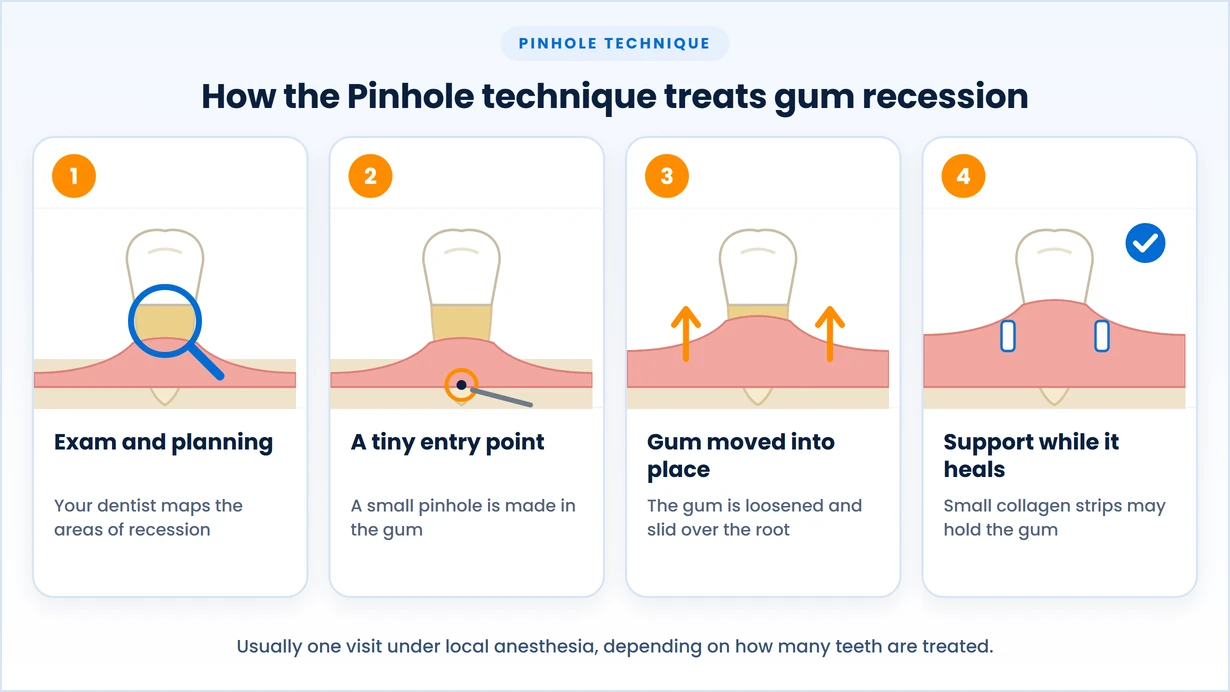
Pinhole technique steps for gum recession treatment: exam, tiny entry point, gum moved over the root, collagen support

The procedure is typically performed under local anesthesia, and it is usually completed in a single visit, depending on how many teeth are treated.

In Dr. Chao’s original study of 43 patients and 121 recession sites, the technique fully covered the root in 81.2% of the less complex (Class I and II) sites, and no second surgical site was needed (International Journal of Periodontics & Restorative Dentistry, 2012).

That was a retrospective study by the technique’s developer, so your own exam matters more than any study average.

At Moa Dental, we offer Pinhole Gum Rejuvenation for patients with receding gums. Our founder, Dr. Jongwook Lee, is a certified provider of the minimally invasive Pinhole® technique.

Pinhole vs Gum Grafting: How Do They Compare?

Both treatments aim to cover exposed roots and protect the tooth. The main differences are how the tissue is moved, whether a second surgical site is needed, and how recovery feels.

FactorPinhole techniqueTraditional gum graft
Incisions and stitchesOne tiny entry point, no stitchesIncisions and stitches
Tissue usedYour existing gum, moved into placePalate tissue, nearby gum, or donor tissue
Second surgical siteNoneThe palate, when your own tissue is used
VisitsUsually one, depending on how many teethMay be done in stages
Typical recoveryMild swelling or soreness for a few daysAbout two weeks to feel back to normal
Track recordNewer, first published in 2012Decades of use and research

Who Is a Good Candidate for Each Treatment?

Many people with gum recession can have either treatment, but your gums, bone, and the cause of the recession decide which one fits. Gum disease needs to be under control first, whatever technique you choose.

  • The Pinhole technique may suit you if you have recession on one or several teeth, enough healthy gum tissue to move, and you want to avoid a second surgical site.
  • Traditional grafting may be the better fit if your gum tissue is very thin, the recession is severe, or there is significant bone loss around the tooth.

Your dentist will examine your gums and recommend the option that fits your situation, including whether a simpler step, like bonding or a change in brushing, is enough for now.

Wondering whether the Pinhole technique is right for your gums?

What Is Recovery Like After Each Procedure?

Recovery after the Pinhole technique is usually short. Most patients have only mild swelling or soreness for a few days. Your dentist may recommend:

  • Eating soft foods for a few days
  • Avoiding aggressive brushing near the treated area
  • Following your oral hygiene instructions closely
  • Coming back for follow-up visits to check healing

Gum graft recovery usually takes longer, because both the graft and, often, the palate need to heal. Cleveland Clinic notes that recovery time depends on the number of teeth treated, the graft source, and the type of procedure.

With either treatment, results can be long-lasting when you also fix what caused the recession. If hard brushing, grinding, or gum disease continue, the gums can start to recede again.

How Much Does Gum Recession Treatment Cost?

The cost depends on the technique, how many teeth are treated, and your insurance. For a national benchmark, CareCredit’s 2024 cost study puts the average gum tissue graft at $2,742 per procedure. Fees for the Pinhole technique also vary with the number of teeth treated, so your quote will depend on your exam.

At Moa Dental, we accept all PPO insurance, and as a courtesy, we bill your insurance company and track claims. We also accept CareCredit, which you can apply for online or in our office. Our insurance and payment options page lists the ways you can pay.

Why Shouldn’t You Wait to Treat Receding Gums?

Because recession usually does not hurt at first, it is easy to put off. But exposed roots are softer than enamel, so they wear and decay more easily. When recession comes from gum disease, the bone around the tooth can also break down over time, and teeth may begin to feel loose.

Treating recession early usually means a simpler procedure, less sensitivity, and a better long-term result.

How Do You Keep Your Gums Healthy After Treatment?

Treating recession is only half the job, and protecting your gumline keeps your results looking good for years.

Use a soft-bristled toothbrush with gentle, circular strokes, clean between your teeth every day, and wear a night guard if you grind. Our guide to non-surgical TMJ therapy explains how custom night guards protect teeth from grinding and clenching. Keep up with your regular dental checkups, too.

If you have had gum disease, regular periodontal maintenance, typically every 3 to 4 months, helps keep bacteria under control below the gumline.

Where Can You Get Gum Recession Treatment in Torrance?

Moa Dental offers Pinhole Gum Rejuvenation at our office on Sepulveda Boulevard in Torrance. If your teeth look longer, feel sensitive, or your gums seem to be pulling back, our team will check your gums, look for the cause, and recommend the treatment that fits your needs.

You can read more about the procedure on our Pinhole Gum Rejuvenation page. To book a gum evaluation, call Moa Dental at (310) 530-2875 or visit us at 3226 Sepulveda Blvd, Torrance, CA 90505.

Frequently Asked Questions

Can receding gums grow back on their own?

No. Once gum tissue has receded, it does not grow back by itself. Treating the cause can stop it from getting worse, and the Pinhole technique or gum grafting can restore the gumline.

Is the Pinhole technique better than gum grafting?

Neither is right for everyone. The Pinhole technique avoids stitches and a second surgical site, while grafting has the longer track record and may suit very thin gums, severe recession, or bone loss.

Does the Pinhole technique hurt?

The procedure is typically done under local anesthesia to keep you comfortable. Afterward, most patients have only mild swelling or soreness for a few days.

How long does Pinhole treatment take?

It is usually completed in a single visit, depending on how many teeth are treated. In Dr. Chao’s 2012 study, the average procedure took about 22 minutes.

How long is recovery after a gum graft?

Cleveland Clinic says most people feel back to normal in about two weeks. Recovery depends on the number of teeth treated, the graft source, and the type of procedure.

How long do gum recession treatment results last?

Results can be long-lasting when the cause is under control. If hard brushing, grinding, or gum disease continue, recession can return.

Does insurance cover gum recession treatment?

Coverage depends on your plan. Moa Dental accepts all PPO insurance, bills your insurance company as a courtesy, and accepts CareCredit financing.

On this page

Book Your Visit

Have a question about this topic? Our team is happy to help.

Related guides

Scroll to Top