Missing teeth affect more than your smile. They can change how you eat, how you speak, and how you feel about yourself. The good news is that dental implants have made replacing missing teeth more natural and comfortable than ever. One of the most versatile options today is All-on-X dental implants, a modern way to restore a full arch of teeth at once. At Moa Dental in Torrance, we help patients rediscover confident smiles with this approach.
Here is a clear, friendly guide to how All-on-X works, who it helps, what affects the cost, and how it compares to other missing teeth solutions.
Why Replacing Missing Teeth Matters
Losing teeth is about more than appearance. Gaps make it harder to chew and can change the way you speak. Over time, the teeth around a gap may drift, and the jawbone can shrink because it is no longer stimulated by a tooth root.
That bone loss is the quiet problem. It happens gradually, and it is the reason long-time denture wearers often notice their facial profile changing or their denture getting looser year after year. Replacing missing teeth restores your bite, protects your remaining teeth, and helps keep your jaw healthy. Modern missing teeth solutions can do all of this while looking completely natural.
What Are Dental Implants?
A dental implant is a small titanium post that a dentist places into your jawbone to act like the root of a missing tooth. Once it bonds with the bone, a process called osseointegration, a crown, bridge, or full arch of teeth can be attached on top. According to the Cleveland Clinic, implants are a well-established tooth replacement option with a long track record of success.
Because implants replace the root, they are stable and help protect the bone, which is a major advantage of modern implant dentistry. You can learn more on our dental implants page.
What Is All-on-X?
All-on-X is a full-arch solution. Instead of placing one implant for every missing tooth, your dentist uses just a few implants to support a complete, fixed bridge of teeth for an entire arch. The X stands for the number of implants that is right for you, most often four or six. That means all on 4 implants and all on 6 implants are both types of All-on-X.
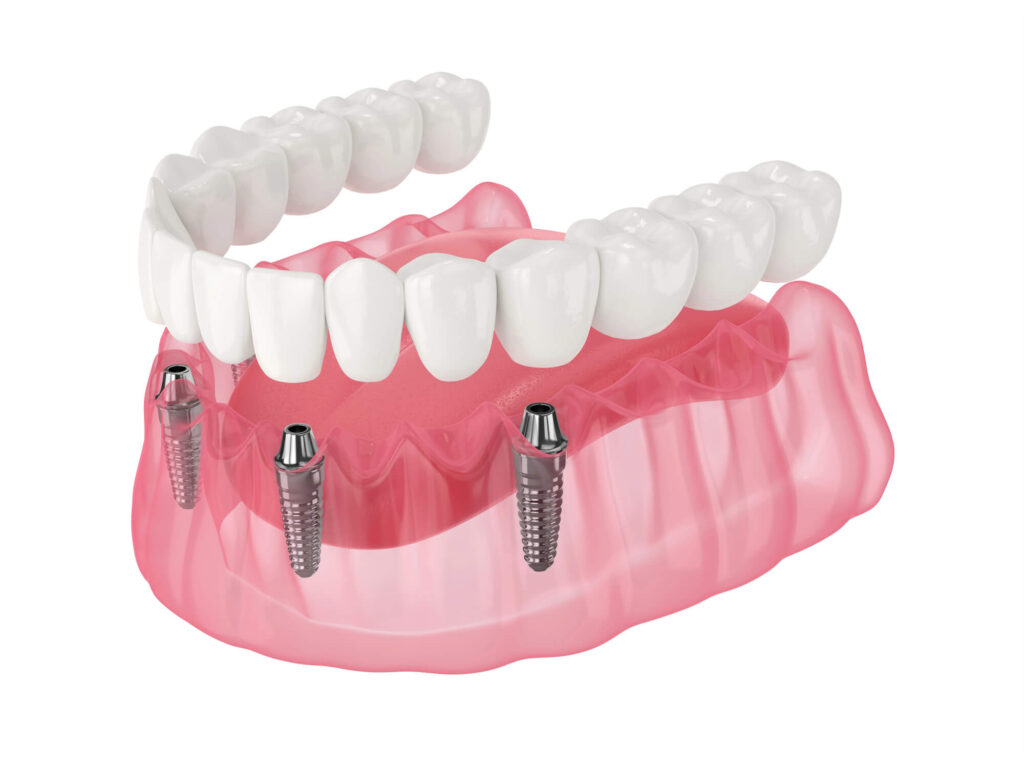
This makes it possible to replace a whole upper or lower set of teeth with a secure, natural-looking result. Because the teeth are fixed in place, All-on-X is one of the most comfortable forms of full arch dental implants and permanent tooth replacement. Our All-on-X full mouth dental implants page explains how we design each case.
All-on-4 vs. All-on-6: How Your Dentist Chooses the X
Since the X is the number of implants, a natural question is why one person gets four and another gets six. The answer comes down to what your 3D scan reveals:
- Bone volume and density. Strong, plentiful bone can support a full arch on four well-angled implants. Where bone is softer or thinner in places, adding implants spreads the load more safely.
- Which arch is being treated. Upper jawbone is naturally less dense than lower jawbone, so upper arches sometimes call for more implants.
- Your bite forces. A strong bite or a history of grinding may favor extra support.
- Long-term insurance. More implants can add stability and redundancy for the bridge over the years.
Neither number is “better” in the abstract — the right X is the one your anatomy supports. That is exactly what the planning scan is for, and it is why two quotes for All-on-X can legitimately differ.
How All-on-X Compares to Other Options
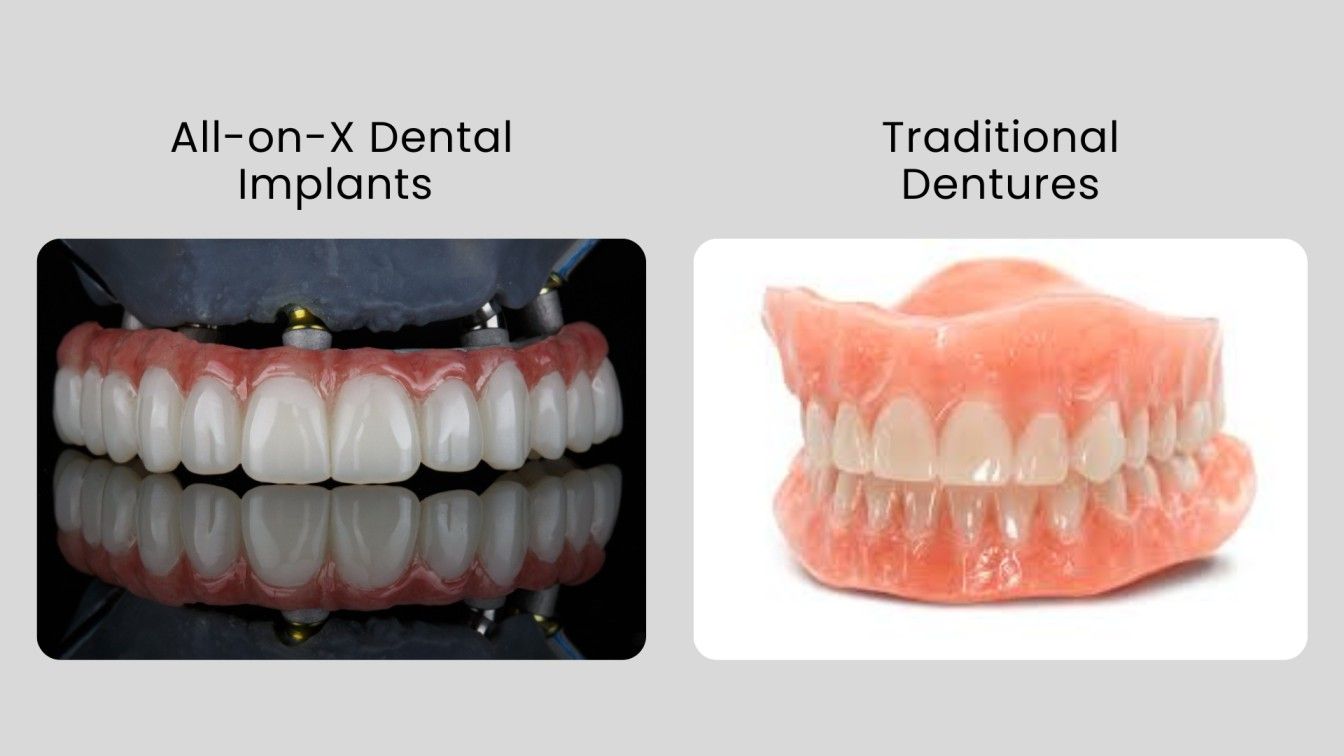
All-on-X is not the only way to replace missing teeth. Here is how it stacks up against the alternatives.
Dentures and snap-on dentures
Traditional dentures rest on the gums and can slip while you eat or talk. Snap on dentures, also called implant supported dentures or implant retained dentures, clip onto a couple of implants for far more stability and can still be removed for cleaning. All-on-X goes a step further and stays fixed in place, so it feels the most like natural teeth. If a removable option suits you better, our implant retained dentures and traditional dentures are also worth exploring.
Bridges
A traditional dental bridge or an implant bridge is great for replacing a few teeth in a row. An implant supported bridge uses implants instead of relying on neighboring teeth. All-on-X, on the other hand, is designed to restore a full arch, not just a small section.
The Dental Implant Procedure: What to Expect
Every treatment starts with a consultation and a 3D scan. Here is what the dental implant procedure usually looks like:
- Exam and planning: 3D imaging maps your bone and nerves so your plan is precise and safe.
- Placing the implants: during a comfortable dental implant surgery, the implants are positioned in the jaw, with sedation options available if you feel anxious.
- Temporary teeth: many patients leave the same day with a temporary fixed set of teeth.
- Healing: over the next few months, the implants bond with the bone.
- Final restoration: your permanent bridge, the final dental implant restoration, is attached.
The result is a full mouth restoration, sometimes called full mouth rehabilitation, that looks and works much like a natural set of teeth.
Recovery: What the First Weeks Feel Like
Most patients are surprised by how manageable recovery is. Some swelling, bruising, or tenderness in the first few days is normal, and over-the-counter pain relief is usually enough. You will start with softer foods while the implants begin to heal, then gradually work back to a normal diet as your dentist gives the go-ahead.
During the healing months, the implants quietly fuse with your jawbone beneath your temporary teeth. Most people return to work and daily routines quickly, and follow-up visits let your dentist confirm everything is healing on schedule.
What Affects the Cost of All-on-X
There is no single price, because every mouth is different. Your dental implant cost depends on things like:
- The number of implants used, such as four or six
- Whether you are treating one arch or both
- The materials chosen for your bridge
- Whether you need extractions or any bone work first
- The 3D imaging and planning involved
Because of these factors, the only way to learn your full mouth implants cost is with an exam and a written treatment plan. Many patients also use dental insurance or monthly payment options to spread out the investment — our insurance and payment options page explains what we accept. We are always happy to walk you through your options.
Caring for Your Implants
Caring for All-on-X teeth is simple. Brush twice a day, clean around and under the bridge as your dentist shows you, and keep up with regular checkups. Many patients find a water flosser makes cleaning under the bridge quick and easy, and your hygienist will check the fit and health of your gums at each visit.
With good care, dental implants are built to last many years, often decades, though the bridge on top may need occasional maintenance. Results vary from person to person, and no result is guaranteed — but daily habits are the single biggest thing you control.
Is All-on-X Right for You?
All-on-X can be a great fit if you are missing most or all of your teeth in an arch, you are tired of loose dentures, or you simply want a stable, long-term solution. The best way to find out is a consultation, where a dentist with implant training checks your bone and gums and designs a plan around you.
A few health factors get extra attention during planning. Gum disease needs to be under control before implants are placed, smoking slows healing and is worth pausing or quitting around surgery, and conditions like unmanaged diabetes can affect how bone heals. None of these automatically rule you out — they simply shape the plan, and being upfront about your health history is the fastest route to a safe result.
Groups like the American Academy of Implant Dentistry recommend choosing a provider with advanced implant training, so it helps to ask about your dentist’s experience, the implant systems they use, and how they plan your case. At Moa Dental in Torrance, that experienced, personalized care is exactly what we aim to provide.
A few questions worth bringing to any All-on-X consultation:
- How many implants would my case need, and why?
- Will I need extractions or bone grafting first?
- What is included in the quote — imaging, surgery, temporaries, and the final bridge?
- What will my temporary teeth be like while I heal?
Restore Your Smile at Moa Dental in Torrance
If missing teeth are holding you back, All-on-X dental implants could be the fresh start you have been looking for. The team at Moa Dental in Torrance would love to review your options, answer your questions, and build a plan that fits your smile and your goals, with no pressure.
Call us today at (310) 530-2875 to schedule your dental implant consultation. A confident, comfortable smile could be closer than you think.
Frequently Asked Questions
What does All-on-X mean?
All-on-X is an umbrella term for a full-arch implant bridge. The X stands for the number of implants that is right for you, often four or six. Those implants support a complete, fixed set of teeth for the upper or lower jaw.
How is All-on-X different from dentures?
Traditional dentures rest on the gums and can slip, and you take them out each night. All-on-X teeth are fixed to implants and stay in place. They feel more like natural teeth and also help protect the jawbone.
How long does the dental implant procedure take?
It varies by patient. You start with a consultation and 3D scan, then a surgery visit where implants are placed, often with a temporary set of teeth the same day. Your permanent bridge is added after the implants heal, which usually takes a few months.
Are dental implants safe?
Dental implants are a well-established, widely used treatment and are considered safe when placed by a trained dentist. Some swelling or soreness after surgery is normal and usually settles within a few days.
What can I eat after All-on-X surgery?
Plan on soft foods at first — smoothies, eggs, soups, and pasta are typical in the early days. As healing progresses and your dentist confirms the implants are stable, you gradually return to a normal, varied diet.
How long do All-on-X implants last?
With good care and regular checkups, the implants themselves are built to last many years, often decades. The bridge on top may need occasional maintenance or replacement over time. Results vary from person to person.
Keep Reading